
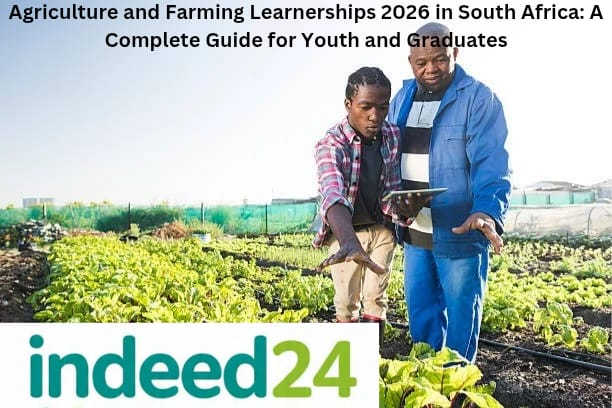
Agriculture and Farming Learnerships 2026 in South Africa: A Complete Guide for Youth and Graduates
Agriculture remains one of South Africa’s most important economic sectors, supporting food security, job creation, rural development, and exports. As the country continues to invest in skills development, agriculture and farming learnerships for 2026 present a valuable opportunity for young people who want to build practical skills, gain recognised qualifications, and enter the agricultural value chain.
These learnerships are designed for unemployed youth, matriculants, and graduates who are passionate about farming, agribusiness, food production, and sustainable agriculture. This guide explains what agriculture learnerships are, who can apply, the fields available, how to apply, and why these programmes are important for South Africa’s future.
Agriculture and Farming Learnerships 2026 in South Africa: A Complete Guide for Youth and Graduates
What Are Agriculture and Farming Learnerships?
Agriculture and farming learnerships are structured training programmes that combine theoretical learning with practical workplace experience. They are usually registered on the National Qualifications Framework (NQF) and aligned with industry needs.
Most learnerships run for 12 to 24 months, depending on the qualification level and specialisation. Learners receive hands-on training on farms, agricultural businesses, research institutions, or processing facilities while completing accredited coursework through a training provider.
In many cases, learners receive a monthly stipend, making these programmes accessible to young people who may not be able to afford full-time studies.
Agriculture and Farming Learnerships 2026 in South Africa: A Complete Guide for Youth and Graduates
Why Agriculture Learnerships Matter in South Africa
South Africa faces several challenges related to food production, climate change, unemployment, and rural poverty. Agriculture learnerships play a key role in addressing these challenges by:
- Developing practical farming and agribusiness skills
- Supporting youth employment, especially in rural areas
- Strengthening food security and local production
- Encouraging innovation and sustainability in farming
- Creating pathways into formal employment or self-employment
For young people, these learnerships provide real work experience that improves employability and opens doors to long-term careers.
Fields Covered by Agriculture and Farming Learnerships 2026
Agriculture learnerships are not limited to traditional crop farming. They cover a wide range of disciplines across the agricultural value chain, including:
Primary Agriculture
- Crop production
- Livestock farming
- Poultry production
- Dairy farming
- Horticulture
Agribusiness and Farm Management
- Agricultural economics
- Farm supervision and management
- Supply chain and logistics
- Agricultural marketing
Food Production and Processing
- Food technology
- Food safety and quality control
- Agro-processing
- Packaging and distribution
Environmental and Sustainable Agriculture
- Soil science and conservation
- Sustainable farming practices
- Water management and irrigation
- Climate-smart agriculture
Technical and Support Services
- Agricultural machinery operation
- Farm maintenance and infrastructure
- Animal health and basic veterinary support
This variety allows applicants to choose a path that matches their interests and career goals.
Who Can Apply for Agriculture Learnerships 2026?
While requirements differ slightly depending on the programme, most agriculture and farming learnerships are open to applicants who meet the following criteria:
- South African citizens
- Aged between 18 and 35
- Unemployed at the time of application
- Have completed Grade 10, Grade 12 (Matric), or a relevant qualification
- Interested in agriculture, farming, or food production
- Willing to commit to the full duration of the learnership
Some programmes may give preference to:
- Applicants from rural or previously disadvantaged communities
- Youth with agricultural studies or practical exposure
- Graduates in agriculture-related fields
People living with disabilities are often encouraged to apply.
Qualifications and NQF Levels
Agriculture learnerships are usually offered at different NQF levels, such as:
- NQF Level 2–3: Entry-level farming and agricultural support roles
- NQF Level 4: Supervisory and technical roles
- NQF Level 5–6: Advanced agricultural and agribusiness skills
Completing a learnership results in a nationally recognised qualification, which can be used to pursue further studies or employment.
Benefits of Agriculture and Farming Learnerships
Participating in an agriculture learnership offers several advantages:
- Practical, hands-on experience
- Monthly stipend during training
- Accredited qualification upon completion
- Improved chances of employment
- Exposure to real farming and agribusiness environments
- Opportunity to start or expand your own farming enterprise
Many learners are absorbed into permanent roles after completing their learnerships, especially in commercial farms and agribusiness companies.
How to Apply for Agriculture Learnerships 2026
Step 1: Look for Verified Opportunities
Agriculture learnerships are usually advertised by:
- Government departments
- Agricultural companies
- SETAs and training providers
- Development agencies
Always use official websites and trusted platforms.
Go to the official AGRISETA website and navigate to the Learnerships or Skills Development section
Step 2: Prepare Your Documents
Commonly required documents include:
- Certified copy of ID
- Certified Matric certificate or latest results
- Updated CV
- Proof of residence
Ensure certifications are recent and clear.
Step 3: Submit Your Application
Applications may be submitted online or via email, depending on the provider. Follow instructions carefully and submit before the closing date.
Step 4: Attend Assessments or Interviews
Shortlisted candidates may be invited for interviews, assessments, or orientation sessions.
Important Application Periods for 2026
Most agriculture learnerships for 2026 are advertised between mid-2025 and early 2026. Application dates vary, so it is important to check regularly and apply early.
Late or incomplete applications are usually not considered.
Career Opportunities After Completing a Learnership
After completing an agriculture or farming learnership, learners can pursue careers such as:
- Farm worker or supervisor
- Agricultural technician
- Agribusiness assistant
- Food production officer
- Self-employed farmer or agri-entrepreneur
Some learners continue their studies at colleges or universities to further specialise.
Avoiding Learnership Scams
Due to high demand, scams do exist. Protect yourself by:
- Applying only through official channels
- Avoiding payments for placement
- Verifying accreditation and programme details
- Ignoring promises of guaranteed jobs
Legitimate learnerships do not charge application fees.
Final Thoughts
Agriculture and farming learnerships in South Africa for 2026 offer an excellent pathway for young people who want to enter the agricultural sector with practical skills and recognised qualifications. Whether your interest lies in farming, agribusiness, or food production, these programmes provide real opportunities for growth, employment, and contribution to national development.
If you are passionate about agriculture and ready to build a future in this vital sector, start preparing now and apply as soon as opportunities become available.